THE AICONNECTOR READING SHELF

Books for building
AI systems.

Build your understanding alongside your next project. Six focused selections, from the mechanics of language models to the systems that keep them useful.

6 books · Publisher-based selections · Checked

How we select books ↓

START WITH YOUR NEXT TASK

Find your way into the shelf

AI engineering & reliability

Read for the decisions around the model: what to build, how to evaluate it, and how to operate it.

Application engineering

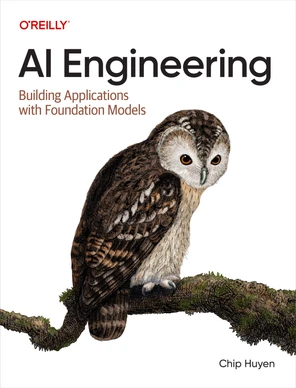
AI Engineering

Chip Huyen

O’Reilly ·
Original English edition · O’Reilly online publication

Publisher-based selection
Who it’s for
Software engineers choosing how to build and evaluate foundation-model applications.
What you’ll learn
Model selection, evaluation, RAG, adaptation, and serving cost trade-offs.
Suggested prerequisites
Programming experience and basic familiarity with model APIs.
When to read it
Before choosing an application architecture or committing to fine-tuning.
Keep in mind
A broad systems guide; pair it with current SDK documentation for implementation.

Reliability & operations

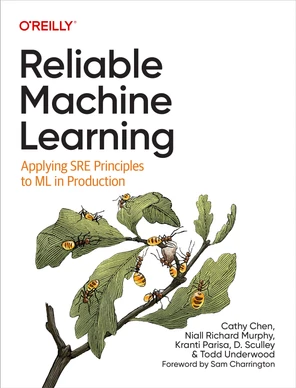
Reliable Machine Learning

Cathy Chen, Niall Richard Murphy, Kranti Parisa, D. Sculley, and Todd Underwood

O’Reilly ·
Original English edition

Publisher-based selection
Who it’s for
Engineers responsible for operating ML systems after launch.
What you’ll learn
SRE practices for ML, service objectives, data reliability, monitoring, and organizational ownership.
Suggested prerequisites
Experience with deployed software and familiarity with the ML lifecycle.
When to read it
When a prototype becomes a service with reliability targets and on-call responsibilities.
Keep in mind
Predates the current agent ecosystem; use it for operational principles, not current LLM APIs.

Agents & knowledge systems

Go deeper on tool use, delegation, and retrieving the evidence an application needs.

Agent workflows

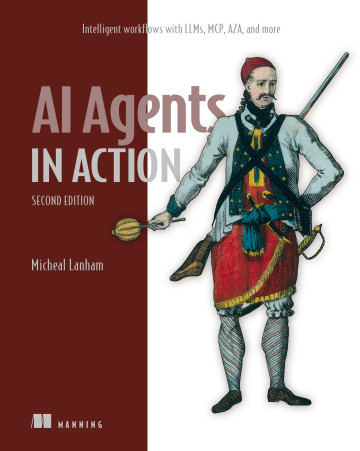
AI Agents in Action, Second Edition

Micheal Lanham

Manning ·
Second edition

Publisher-based selection
Who it’s for
Python developers building tool-using assistants and agent workflows.
What you’ll learn
Tools and MCP, memory, planning, multi-agent patterns, and agent evaluation.
Suggested prerequisites
Intermediate Python; prior agent-building experience is not required by the publisher.
When to read it
When you want implementation examples to accompany an agent architecture decision.
Keep in mind
Check the companion code and dependency versions before running examples.

Retrieval & knowledge systems

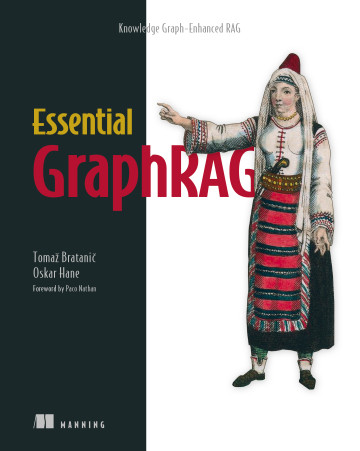
Essential GraphRAG

Tomaž Bratanič and Oskar Hane

Manning ·
Original English edition

Publisher-based selection
Who it’s for
Developers exploring graph-based retrieval for connected information.
What you’ll learn
Knowledge-graph construction, vector and graph retrieval, Cypher queries, and RAG evaluation.
Suggested prerequisites
Intermediate Python and some graph-database experience, such as Neo4j.
When to read it
When relationships between entities matter to the questions your RAG system must answer.
Keep in mind
Test against your own retrieval baseline before taking on graph-modeling complexity.

Language-model foundations

Build intuition first, or follow an implementation from text inputs to a working model.

Language-model foundations

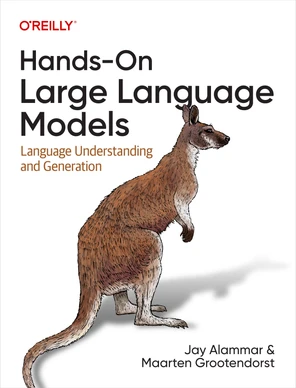
Hands-On Large Language Models

Jay Alammar and Maarten Grootendorst

O’Reilly ·
Original English edition

Publisher-based selection
Who it’s for
Developers who want visual explanations alongside practical language-model examples.
What you’ll learn
Embeddings, transformer concepts, using pretrained models, and training or fine-tuning techniques.
Suggested prerequisites
Comfort reading Python; basic machine-learning vocabulary helps.
When to read it
When model terminology is getting in the way of understanding application design.
Keep in mind
Use current package documentation alongside the book’s notebooks.

Model implementation

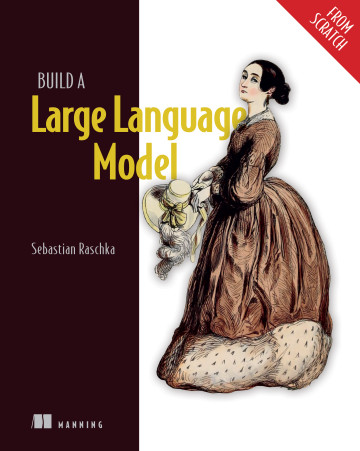
Build a Large Language Model (From Scratch)

Sebastian Raschka

Manning ·
Original English edition

Publisher-based selection
Who it’s for
Programmers who want to understand language models by implementing their components.
What you’ll learn
Text processing, attention, a GPT-style model, pretraining, and fine-tuning with Python and PyTorch.
Suggested prerequisites
Intermediate Python and basic machine learning; be ready to work with tensors.
When to read it
When you want to understand what happens beneath a model API.
Keep in mind
An educational implementation path; training a frontier model is a different scale of work.

EDITORIAL APPROACH

A focused shelf, with clear sources.

These selections are based on official publisher descriptions, contents, and publication details. They are not personal, cover-to-cover reviews. Reader fit, suggested prerequisites, and reading order reflect our editorial judgment.

We choose books that support concrete engineering work and connect to our field guides. The publication date describes the edition linked here, not a claim that it is the newest edition. AI Engineering uses O’Reilly’s December 2024 online publication date; its author lists the book as a 2025 title.

Cover artwork is from the linked publishers and belongs to its respective rights holders. There are no affiliate links or paid placements. Check the publisher for current editions, formats, availability, and prices. Fast-changing APIs and examples should be read alongside current documentation.

Suggest a book →