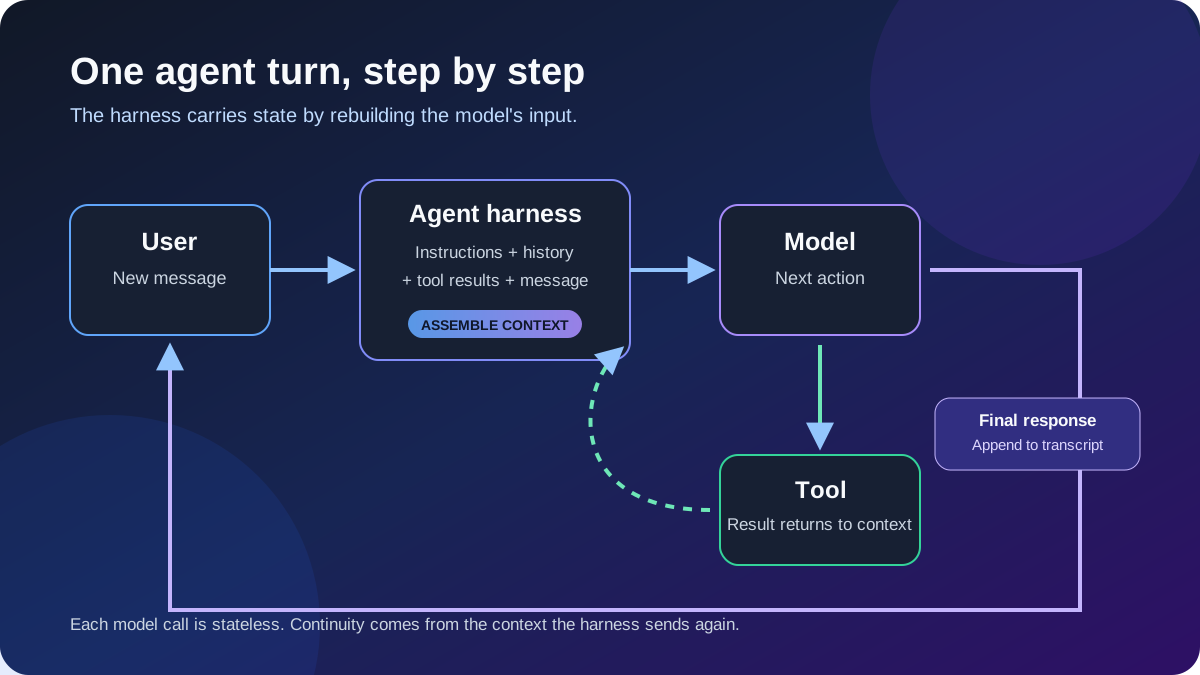
Agent architecture · Context engineering
How a turn works in an agent harness
Why model calls are stateless, why context and token usage grow, how tools create request loops, and what compaction changes.
Read the explainer
Writing and exploration
Notes on applied AI, system design, and the techniques that turn emerging research into useful engineering practice.
Featured
Evidence-led comparisons and explainers for decisions that look simple on the surface but have materially different architecture, cost, and control implications.
Agent architecture · Context engineering
Why model calls are stateless, why context and token usage grow, how tools create request loops, and what compaction changes.
Read the explainerKnowledge systems · Architecture landscape
A practical comparison of eight open-source graph-knowledge approaches, production reference architectures, deployment trade-offs, and the real cost model behind them.
Explore Project AtlasAgentic engineering · Control models
A vendor-neutral field guide to three continuation mechanisms—what makes each agent continue, what makes it stop, and how to choose by the required stopping rule.
Open the field guideArchive

Applied AI · Enterprise operations
An exploration of how intelligent systems can identify bottlenecks, improve decisions, and make operational workflows more adaptive.
Read article
Machine learning · Exploration
A technical introduction to a physics-inspired approach to identifying structure in complex, multidimensional data.
Read article